
⚠️ Important Notice: The application submission process for Indian Army Civilian Switch Board Operator (CSBO) Grade-II Recruitment 2026 was scheduled to close on May 31, 2026 and is currently closed. This article serves as a permanent reference guide detailing post-wise 10th pass requirements, PBX switchboard experience validation, Pay Level 2 salary structures, and practical trade test rules for candidates tracking Indian Army Group C civilian vacancy cycles.
The Indian Army officially published the recruitment advertisement to fill 190 Civilian Switch Board Operator (CSBO) Grade-II vacancies across various Signal Units, Headquarters, and Command Corps. As a Group C civilian cadre post within Ministry of Defence (MoD) establishments, CSBO personnel manage military telephone exchanges, EPABX/PBX switchboards, priority communication lines, and operational call routing.
Selection for this cadre involves a three-tier evaluation process comprising a Written Examination, a Practical Demonstration Test on PBX systems, and a Personal Interview / Document Verification stage.
📌 Indian Army CSBO Recruitment 2026: Key Overview
| Particulars | Details |
|---|---|
| Recruiting Organization | Indian Army (Ministry of Defence / Corps of Signals) |
| Post Name | Civilian Switch Board Operator (CSBO) Grade-II (Group C Civilian) |
| Total Vacancies | 190 Posts |
| Educational Qualification | Class 10th Pass (Matriculation) from a recognized Board |
| Mandatory Technical Experience | Minimum 06 Months PBX / EPABX Switchboard Operation Experience |
| Age Limit | 18 to 25 Years (General Category) | Relaxation for Reserved Cadres |
| Pay Matrix / Scale | Pay Level 2 (₹19,900 – ₹63,200) + Army Civilian Allowances |
| Selection Mode | Written Test (40%) + Practical Test (35%) + Interview (25%) + DV |
| Application Fee | ₹100/- (As per official notification guidelines) |
| Application Mode | Official Email Submission / Designated Command Postal Address |
| Official Website | indianarmy.nic.in |
📅 Official Recruitment Timeline
| Recruitment Phase | Official Schedule |
|---|---|
| Official Notification Release Date | May 02, 2026 |
| Application Submission Start Date | May 02, 2026 |
| Closing Date for Submission of Applications | May 31, 2026 |
| Written Examination Schedule | To Be Announced |
| Practical PBX Test & Interview Dates | Post Written Exam Results |
🏢 Category-Wise Vacancy Breakdown
The 190 CSBO Grade-II posts are distributed across categories as per Central Government civilian reservation rules:
| Category Name | Allocated Vacancies |
|---|---|
| Unreserved (UR / General) | 82 |
| Other Backward Classes (OBC) | 51 |
| Scheduled Caste (SC) | 28 |
| Economically Weaker Section (EWS) | 19 |
| Scheduled Tribe (ST) | 10 |
| Total Vacancies | 190 Posts |
Note: Horizontal reservations apply for Ex-Servicemen (ESM) and Persons with Benchmark Disabilities (PwBD) as specified in official Command notifications.
🎓 Detailed Educational & Technical Experience Criteria
Candidates must satisfy both mandatory conditions on or before the application cutoff date:
1. Academic Qualification
- Must have passed Matriculation (Class 10th Standard) or equivalent examination from a recognized State or Central Board of Education.
- Proficiency in handling spoken and written Hindi and English is essential.
2. Mandatory Technical Experience
- Must possess a valid Experience Certificate proving at least 06 Months of hands-on experience in operating a Private Branch Exchange (PBX) or Electronic Private Automatic Branch Exchange (EPABX) switchboard.
- Experience acquired in BPOs, call centers, corporate telephone exchanges, hospital receptions, hotel switchboard desks, or government offices is valid. The certificate must be issued on official company letterhead with an authorized signature and seal.
🔞 Age Limit Criteria & Relaxations
- Minimum Age Limit: 18 Years
- Maximum Age Limit (General / UR): 25 Years
Category-Wise Upper Age Relaxations
| Category | Upper Age Relaxation | Effective Maximum Age |
|---|---|---|
| General / EWS | No Relaxation | 25 Years |
| OBC (Non-Creamy Layer) | 3 Years | 28 Years |
| SC / ST | 5 Years | 30 Years |
| Persons with Benchmark Disabilities (PwBD) | 10 Years | 35 Years |
| Ex-Servicemen | Military Service + 3 Years | As per rules |
💰 Pay Scale & Army Civilian Benefits
- Pay Level: Level 2 under the 7th Central Pay Commission (CPC) Pay Matrix (₹19,900 – ₹63,200).
- In-Hand Monthly Salary: Approximately ₹27,000 to ₹32,000 per month (including DA at prevailing rates, HRA based on city tier, and Transport Allowance).
- Additional Benefits: Canteen Stores Department (CSD) canteen facility access, medical treatment in military hospitals for self and dependents, MACP time-bound promotion upgrades, and central government pension coverage under NPS.
⚙️ Selection Process & Examination Pattern
The recruitment process features a three-tier selection framework:
1. Written Examination (40% Weightage)
An objective 100-mark OMR-based test (Duration: 2 Hours) covering Class 10th level subjects:
| Section Domain | Questions / Marks |
|---|---|
| General Intelligence & Reasoning | 25 MCQs / 25 Marks |
| Numerical Aptitude (Mathematics) | 25 MCQs / 25 Marks |
| General Awareness (Defence Focus Included) | 25 MCQs / 25 Marks |
| General English Language | 25 MCQs / 25 Marks |
| Total | 100 Questions / 100 Marks |
2. Practical Demonstration Test (35% Weightage)
Qualifying demonstration test evaluating practical handling of EPABX/PBX switchboards, call routing, line testing, and emergency connection protocols. Minimum 40% marks required to qualify.
3. Personal Interview (25% Weightage)
Personal interaction evaluating communication skills, situational decision-making, and familiarity with military communication environments.
📄 Mandatory Documents Checklist
Self-attested photocopies required during submission and verification:
- Class 10th (Matriculation) Marksheet & Passing Certificate (Proof of Age).
- Official PBX/EPABX Experience Certificate (Minimum 6 months on official letterhead).
- Valid Photo Identity Proof (Aadhaar Card, Voter ID, or PAN Card).
- Caste / Category Certificate (SC/ST/OBC-NCL/EWS, if applicable).
- Discharge Certificate / PwBD Certificate (for Ex-Servicemen / PwBD candidates).
- 4 Recent Passport-Size Photographs with light background.
📝 Step-by-Step Guide: How Application Submission Worked
- Downloaded the official application form (Annexure format) from indianarmy.nic.in.
- Filled in personal details, Class 10th scores, and PBX experience details in capital letters using blue/black ink.
- Scanned the filled application form and all supporting marksheets/experience certificates into clear PDF attachments.
- Composed an email addressed to the designated nodal address:
sunshine.rise@nic.in(or the specific Command postal address outlined in regional advertisements) with the subject line:
"Application for CSBO Grade-II Recruitment 2026 - [Candidate Name]". - Attached all scanned soft copies, verified attachment sizes, sent the email, and saved a printed copy of the sent email receipt for personal records.
⚠️ Frequently Asked Questions (FAQs)
1. Is PBX experience mandatory for Indian Army CSBO Recruitment?
Yes. A minimum of 06 months of documented PBX or EPABX switchboard operating experience on official employer letterhead is a mandatory eligibility requirement.
2. Is Indian Army CSBO a uniformed military post or a civilian post?
CSBO Grade-II is a Group C Civilian post within Indian Army establishments. Employees work under Central Government civilian service rules and receive Pay Level 2 benefits.
3. What is the selection criteria weightage for CSBO Grade-II?
Final selection merit is compiled using a formula of 40% weightage for the Written Exam, 35% for the Practical PBX Test, and 25% for the Personal Interview.
4. Are candidates holding a 10th pass certificate from open schooling eligible?
Yes, as long as the open schooling board (such as NIOS) is recognized by the Ministry of Education, Government of India.
Disclaimer: Govt Result Alert is an independent educational news portal providing updates on public sector recruitments. We are not officially affiliated with the Indian Army or the Ministry of Defence. Candidates are advised to cross-verify all official notifications directly at indianarmy.nic.in.
📊 Expert Cutoff Analysis & Preparation Strategy for Indian Army CSBO
Based on our editorial analysis of previous recruitment cycles and increasing competition trends, candidates must aim for safe target scores rather than merely clearing the minimum qualifying benchmark:
- Expected Safe Target: General/UR candidates should target 78%–84% marks in the written examination, while OBC/EWS aspirants should aim for 74%–80%.
- Focus Areas: Prioritize high-scoring sections such as General Intelligence & Reasoning and Quantitative Aptitude. Daily revision of static General Awareness and current affairs from the past 6 months is essential.
- Time Management: Practice with full-length sectional and mock tests strictly in timed exam conditions to improve accuracy and eliminate negative marking errors.
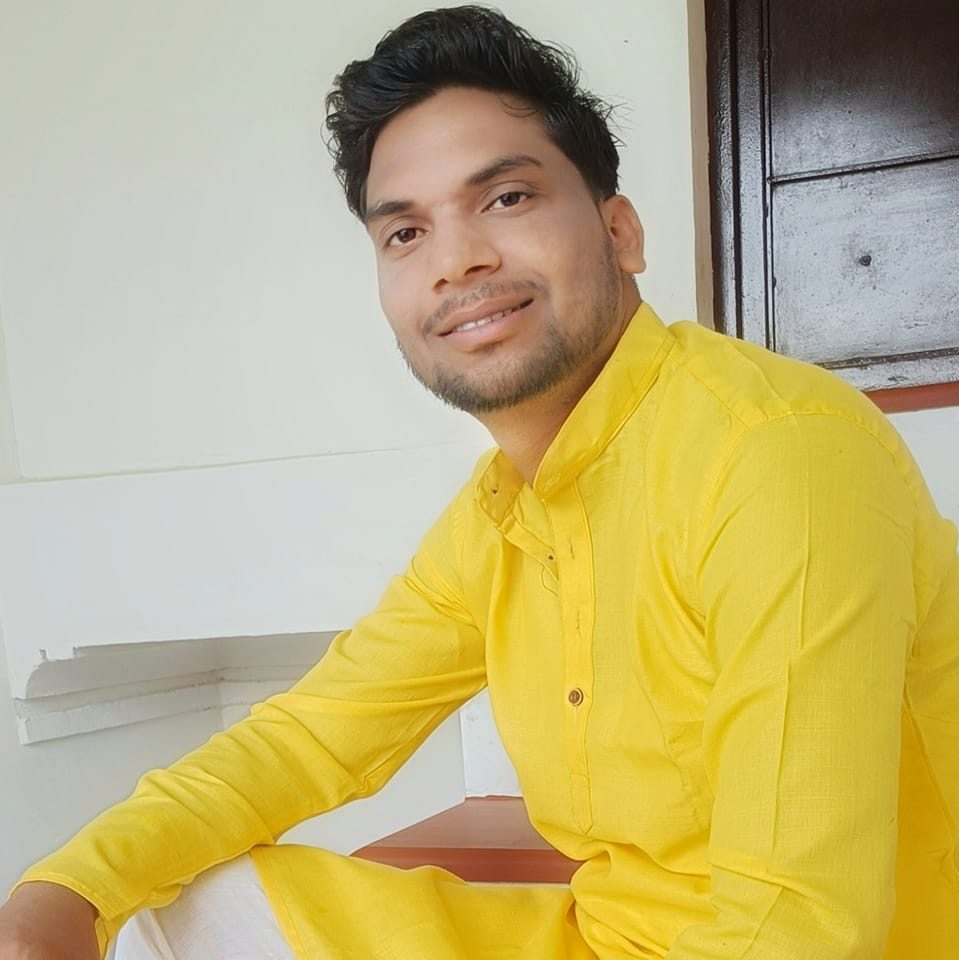
Ram Avtar is the Founder and Lead Career Analyst at Govt Results Alert. With over 6 years of experience analyzing Government Recruitment Notifications, SSC, Banking, and Railway examination patterns, he leads our fact-checking team to deliver authentic, timely, and verified job alerts directly from official government gazettes.