
UP Police Constable Exam Preparation: A Comprehensive Guide
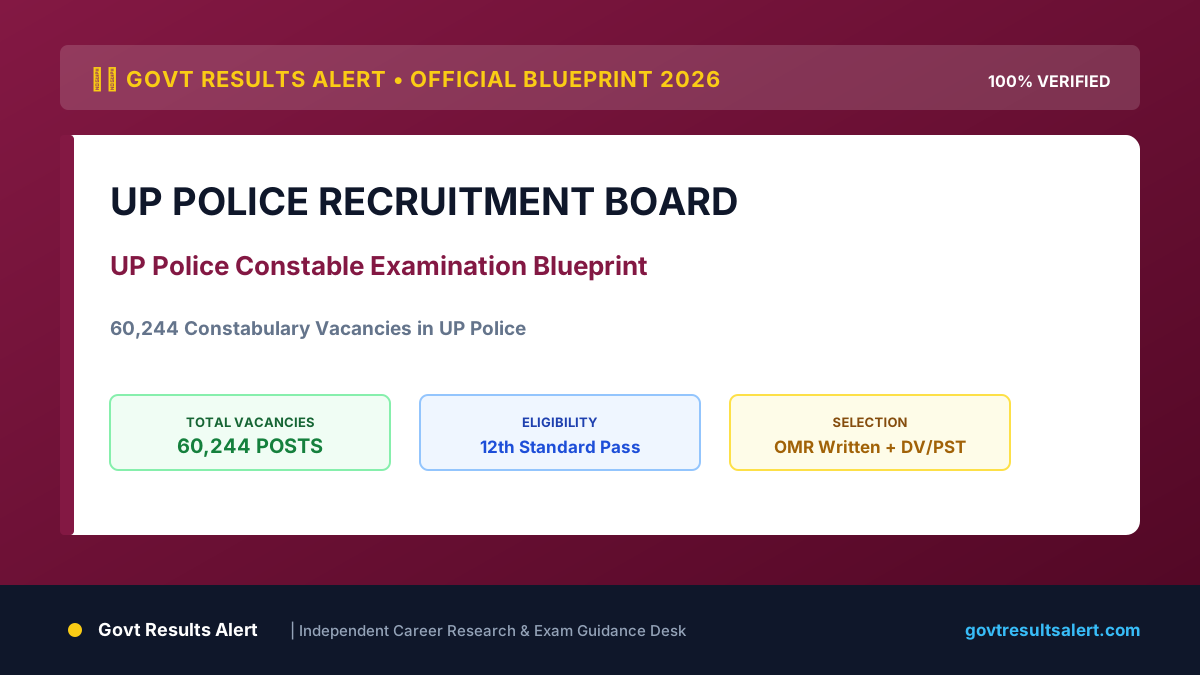
The Uttar Pradesh Police Recruitment and Promotion Board (UPPRPB) conducts one of the largest competitive examinations in India for the recruitment of Police Constables. With hundreds of thousands of aspirants vying for a limited number of vacancies, the competition is exceptionally fierce. Achieving success in this examination requires more than just casual preparation; it demands a systematic study schedule, high-quality reference materials, and a deep understanding of the exam pattern. This guide provides an exhaustive roadmap to help you prepare, practice, and successfully clear the UP Police Constable Exam on your very first attempt.
1. Understanding the Detailed Exam Pattern
Before diving into books and study schedules, it is crucial to establish a complete understanding of how the written examination is structured. The written test is an objective-type, offline OMR-based exam. It consists of 150 questions, each carrying 2 marks, making the entire examination worth 300 marks. However, there is a penalty for incorrect responses. For every wrong answer, 0.5 marks are deducted. This makes accuracy just as important as speed.
| Subject / Section | Number of Questions | Maximum Marks | Estimated Ideal Time |
|---|---|---|---|
| General Knowledge (GK) | 38 Questions | 76 Marks | 20 Minutes |
| General Hindi | 37 Questions | 74 Marks | 20 Minutes |
| Numerical & Mental Ability (Mathematics) | 38 Questions | 76 Marks | 40 Minutes |
| Mental Aptitude / Intelligence / Reasoning | 37 Questions | 74 Marks | 40 Minutes |
| Total Assessment | 150 Questions | 300 Marks | 120 Minutes (2 Hours) |
2. Subject-Wise Syllabus Analysis & Focus Areas
Each of the four sections requires a custom approach. A candidate must divide their time strategically across these topics to maximize their overall score.
A. General Knowledge (GK)
The GK section is vast and covers both national and regional topics. To score well here, focus on:
– **Uttar Pradesh Special:** Geography, history, administrative structure, culture, and social customs of UP.
– **Indian History & Geography:** Focus on the Indian National Movement, freedom struggle, rivers, mountains, and climate.
– **Indian Constitution & Economy:** Key amendments, fundamental rights, and basics of the Indian financial system.
– **Current Affairs:** National and international events of the last 6 to 9 months, awards, sports, and major government policies.
B. General Hindi
This is often the most scoring section for candidates. A solid grasp of grammar rules can easily fetch you full marks. Key topics include:
– **Hindi Grammar (Vyakaran):** Noun, Pronoun, Adjective, Verb, Tense, Active/Passive voice, Sandhi, and Samas.
– **Vocabulary:** Synonyms (Paryayvachi), Antonyms (Vilom), One-word substitutions, and common idioms.
– **Comprehension:** Practice reading passages quickly and extracting correct answers under time pressure.
C. Numerical & Mental Ability
Many candidates find the math section challenging, but it is highly systematic. Focus on clearing basic arithmetic operations:
– **Core Arithmetic:** Number System, Simplification, Decimals & Fractions, HCF & LCM.
– **Application Math:** Ratio & Proportion, Percentage, Profit & Loss, Simple & Compound Interest, Time & Work, Time & Distance.
– **Mensuration:** Basic area and volume formulas for 2D and 3D shapes.
D. Mental Aptitude & Reasoning
This section tests your logical ability and situational decision-making. Topics to cover:
– **Logical Reasoning:** Analogies, Syllogisms, Coding-Decoding, Blood Relations, and Direction Sense.
– **Mental Aptitude:** Public Interest, Law & Order, Communal Harmony, and Basic Police Administration concepts.
3. Recommended Reference Books for Preparation
A selective set of authoritative books will prevent you from getting distracted by low-quality guides. The following books are recommended by successful candidates and exam experts:
- General Knowledge: *Lucent’s General Knowledge* (Green Cover) for static concepts. Complement this with *UP Samanya Gyan* by Arihant Publications for state-specific history and administrative facts. For Current Affairs, refer to *Eduterya* or *Speedy Current Affairs* magazines.
- General Hindi: *Samanya Hindi* by Aditya Publication or *Lucent’s Samanya Hindi*. These books offer excellent practice questions at the end of each chapter.
- Numerical Ability: *Quantitative Aptitude for Competitive Examinations* by Dr. R.S. Aggarwal. Practice solving the exercises without using a calculator.
- Reasoning: *A Modern Approach to Verbal & Non-Verbal Reasoning* by Dr. R.S. Aggarwal or Jha & Jha’s Arihant Reasoning book.
4. The Ultimate 90-Day Study Schedule
Consistent daily study of 6 to 8 hours is required to cover the entire syllabus. Below is a structured 90-day execution plan designed to streamline your learning curve:
- Phase 1: Days 1 to 45 (Concept Building & Note-Taking): Focus on understanding the core theories and concepts. Do not rush to solve full mock tests yet. Clear mathematical formulas, write down Hindi grammar rules, and read static GK chapters. Dedicate 2 hours to GK, 2 hours to Math, 1.5 hours to Hindi, and 1.5 hours to Reasoning every day.
- Phase 2: Days 46 to 75 (Sectional Practice & Revision): Start solving chapter-wise questions. Identify your weak areas and revise them. Focus on increasing your speed in Math and Reasoning. Spend 1 hour daily on revising short notes you wrote during Phase 1.
- Phase 3: Days 76 to 90 (Mock Tests & Strategy): Solve one full-length mock test on an OMR sheet daily. Time yourself strictly for 2 hours. After the test, spend at least 1 hour analyzing which questions you got wrong and why. Focus on minimizing negative marking by skipping doubtful questions.
5. Crucial Exam-Day Tips and Accuracy Strategy
Success on the exam day depends on managing your nerves and using time wisely. Start with the General Hindi and General Knowledge sections, as they do not require complex calculations. You can finish both sections in under 40 minutes, leaving you with a solid 80 minutes to tackle the Numerical and Reasoning sections. Never waste more than 90 seconds on a single mathematical problem; if you get stuck, mark it for review and move on to the next question. Ensure that you fill the OMR bubbles carefully and match the question numbers precisely, as a single offset error can ruin your entire paper.
Frequently Asked Questions (FAQs)
Q1. Is there negative marking in the UP Police Constable Exam?
Yes, there is a negative marking of 0.5 marks for every incorrect answer.
Q2. Can I clear this exam without coaching?
Absolutely. Self-study with high-quality reference books, regular revisions, and solving previous year papers is sufficient to clear the exam.
Q3. What is the educational eligibility for this post?
Candidates must have passed the 12th standard (Intermediate) or equivalent from a recognized board.
Q4. How many hours should I study daily?
A dedicated study of 6 to 8 hours daily with a structured plan is ideal for complete preparation.
Q5. How should I prepare for Uttar Pradesh current affairs?
Read a regional Hindi newspaper daily and refer to monthly current affairs magazines specialized in Uttar Pradesh news.
Q6. What is the physical standard required for male candidates?
Male candidates of General/OBC/SC categories must have a minimum height of 168 cm and a chest expansion of at least 5 cm.
Q7. Is the written exam conducted online or offline?
The exam is conducted offline using OMR sheets (Optical Mark Recognition).
Q8. What is the salary of a UP Police Constable?
The salary is in the Pay Band of Rs. 5200-20200 with a Grade Pay of Rs. 2000. The monthly in-hand salary ranges between Rs. 26,000 to Rs. 30,000 depending on city allowances.
Q9. Which subject is most scoring in this exam?
General Hindi and logical reasoning are the most scoring sections because they take less time and have straightforward concepts.
Q10. How important are mock tests?
Mock tests are extremely important as they improve your time management skills and help you adapt to the pressure of the offline OMR system.
📊 Expert Cutoff Analysis & Preparation Strategy for UP Police Constable Exam Preparation Guide: Best Books & 90-Day Study Plan
Based on our editorial analysis of previous recruitment cycles and increasing competition trends, candidates must aim for safe target scores rather than merely clearing the minimum qualifying benchmark:
- Expected Safe Target: General/UR candidates should target 78%–84% marks in the written examination, while OBC/EWS aspirants should aim for 74%–80%.
- Focus Areas: Prioritize high-scoring sections such as General Intelligence & Reasoning and Quantitative Aptitude. Daily revision of static General Awareness and current affairs from the past 6 months is essential.
- Time Management: Practice with full-length sectional and mock tests strictly in timed exam conditions to improve accuracy and eliminate negative marking errors.
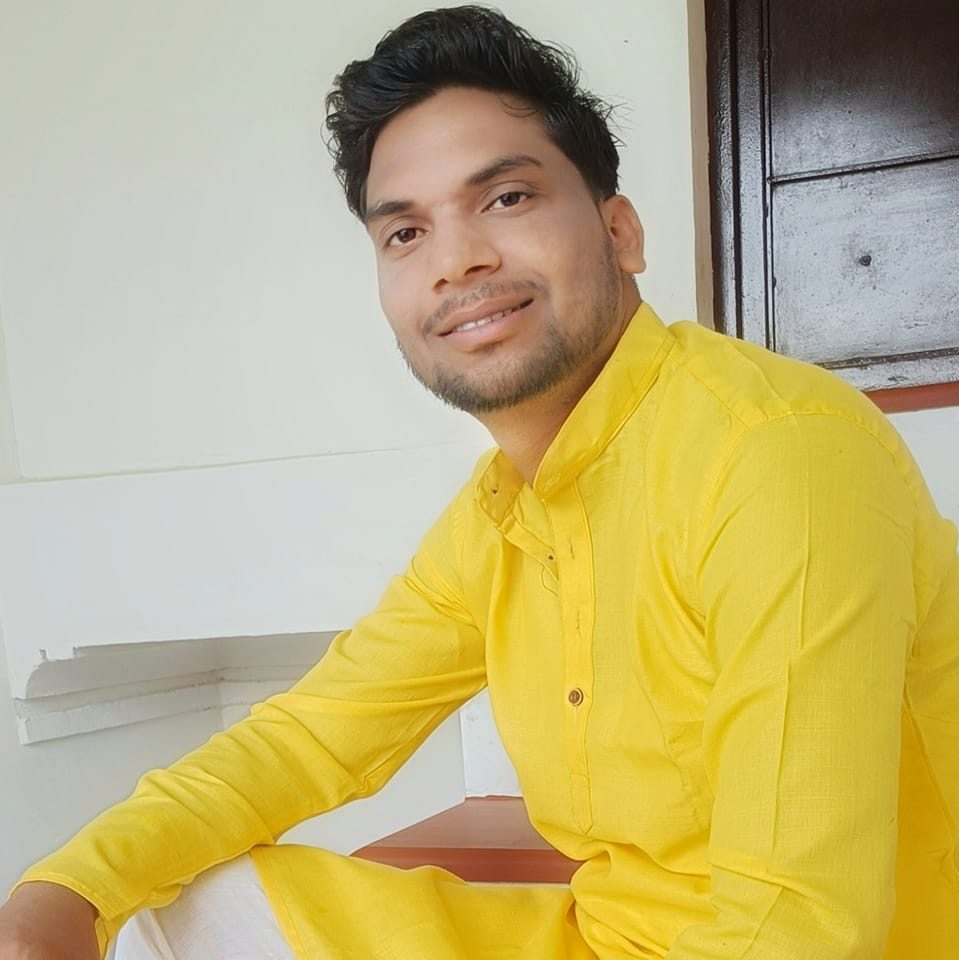
Ram Avtar is the Founder and Lead Career Analyst at Govt Results Alert. With over 6 years of experience analyzing Government Recruitment Notifications, SSC, Banking, and Railway examination patterns, he leads our fact-checking team to deliver authentic, timely, and verified job alerts directly from official government gazettes.