

Mission Brief: 30 Posts | Engineering Graduates Only | No Written Exam | Apply: May 13 – June 11, 2026 (3:00 PM) | Website: joinindianarmy.nic.in
Picture two engineering graduates graduating from the same college in the same year with similar marks.
One spends the next six months preparing for GATE, clears it with a decent score, joins a PSU at ₹50,000 per month, and settles into a predictable desk career. Stable. Safe. Unremarkable.
The other applies for TGC-144, clears SSB, spends 12 months at IMA Dehradun, and gets commissioned as a Lieutenant in the Indian Army at ₹80,000 to ₹1,00,000 per month — plus free accommodation, free medical for the entire family, field allowances that can push monthly compensation above ₹1,25,000 in certain postings, and a lifetime pension after retirement.
Both made reasonable choices. But only one of them gets to say they led soldiers.
The Indian Army has opened applications for the Technical Graduate Course TGC-144 — the direct officer entry route for engineering graduates. 30 vacancies. Free application. No written exam. Selection based on your academic record for shortlisting and then five days at SSB. Training starts January 2027 at IMA Dehradun.
Applications close June 11, 2026 at 3:00 PM — not midnight, not end of day, 3:00 PM exactly. This is the Indian Army. They mean it.
What TGC Actually Is — And What It Is Not
The full name is Technical Graduate Course. The number 144 refers to the course batch — the Army has been running this program for decades, and TGC-144 will commence in January 2027 at the Indian Military Academy in Dehradun.
TGC is a permanent commission entry. Not Short Service Commission. Not a contract. A permanent officer’s career in the Indian Army, starting at the rank of Lieutenant, with a structured promotion ladder that takes motivated officers through Captain, Major, Lieutenant Colonel, Colonel, and beyond. Pension after completing qualifying service. Medical coverage for self and family for life. The full career, not a trial period.
What makes TGC specifically significant is that it is designed for engineering graduates who bring technical expertise into the Army’s technical corps. Civil engineers work on infrastructure, military construction, and field engineering operations. Computer Science and IT graduates support communication networks, cyber operations, and technical intelligence systems. Electronics and Communication engineers maintain radar systems, communication equipment, and electronic warfare assets. Mechanical engineers handle vehicle maintenance, weapon systems maintenance, and technical logistics. Each stream feeds into Army branches where that specific technical knowledge has direct operational relevance.
This is not a generic officer entry where your engineering degree is background noise. Your specialization actually matters to which corps and which work you will do.
The 30 Vacancies — Stream by Stream
| Engineering Stream | Vacancies | Included Specializations |
|---|---|---|
| Civil Engineering | 8 | Structural, Construction, Geotechnical, Environmental, Transportation |
| Computer Science | 6 | CSE, IT, Software, Data Science, AI, ML |
| Electronics and Communication | 6 | ECE, Electronics, Telecommunication, VLSI, Embedded |
| Mechanical Engineering | 6 | Mechanical, Production, Industrial, Thermal, Automotive |
| Electrical Engineering | 2 | Electrical, Power Systems, Instrumentation, Control |
| Miscellaneous | 2 | Biomedical, Chemical, Food Technology, Metallurgical, Mining, Nuclear, Polymer, Production, Rubber, Textile |
Civil Engineering has the most vacancies at 8 — reflecting the Army’s significant ongoing infrastructure and construction requirements. Computer Science, ECE, and Mechanical each have 6 seats. Electrical has 2 and Miscellaneous streams share 2.
One specific note worth highlighting: M.Sc Computer Science holders are eligible for the Computer Science stream. This is explicitly mentioned in the notification — other M.Sc degrees are not eligible for TGC, but M.Sc CS is an accepted qualification alongside BE/BTech in CS or IT.
Eligibility — Every Condition is Absolute
The Indian Army does not have grey areas in TGC eligibility. Each condition is binary — you meet it or you do not.
Gender and Marital Status: Only unmarried male candidates. Marriage is strictly prohibited during training at IMA. Candidates who marry before commissioning are terminated from the course. This applies without exception.
Qualification: BE or BTech in one of the notified engineering streams from a recognized university. Degree from foreign universities requires specific verification — check the official notification for accepted foreign institution qualifications. Distance learning engineering degrees are generally not accepted.
Backlogs: Zero. All papers must be cleared. Final year students with all previous semesters clear can apply, provided their final result is declared by January 1, 2027. If you have a pending backlog in any semester, you are not eligible.
Age: 20 to 27 years as on January 1, 2027. That means born between January 2, 2000 and January 1, 2007. No age relaxation for any category — not SC, not ST, not OBC, not EWS. The Army is specific: if you were born on December 31, 1999, you are too old. If you were born on January 2, 2007, you are too young. No exceptions have ever been made.
Citizenship: Indian citizens. Nepal and Bhutan nationals and Tibetan refugees settled in India before January 1, 1962 may be eligible under specific conditions — verify in the official notification.
The Three-Stage Selection Process
Stage 1 — Shortlisting Based on Engineering Marks
You submit your application with your engineering percentage. The Army shortlists candidates purely on academic marks — higher percentage means higher probability of being called for SSB. Only shortlisted candidates receive SSB call letters.
One specific point about CGPA: if your university uses a CGPA system, convert it to percentage using your university’s official conversion formula. Not an online calculator, not a generic formula — your university’s specific official formula. If the Army’s medical or document verification stage finds that your claimed percentage does not match what your university’s official conversion produces, it is treated as misrepresentation.
Stage 2 — SSB Interview (Five Days)
This is the most significant stage and the one that determines whether you get commissioned. SSB is conducted at designated Service Selection Boards in Prayagraj, Bhopal, Bangalore, Jalandhar, and other notified locations.
Day 1 — Screening: Two tests happen on Day 1. The OIR (Officer Intelligence Rating) test is a structured intelligence assessment — verbal and non-verbal reasoning. The PPDT (Picture Perception and Discussion Test) requires you to look at a hazy picture for 30 seconds, write a story about it in four minutes, and then participate in a group discussion about the stories. Day 1 screening typically eliminates 50 to 60% of candidates. Those who do not clear Day 1 return home that evening.
Days 2 to 4 — Psychological Tests and Group Tasks: The TAT (Thematic Apperception Test) presents 12 pictures sequentially — you write a complete story for each in four minutes. The WAT (Word Association Test) flashes 60 words one at a time at 15-second intervals — you write the first sentence that comes to mind for each word. The SRT (Situation Reaction Test) presents 60 real-world situations in 30 minutes — you write how you would react to each.
These three psychological tests collectively reveal your values, emotional responses, decision-making patterns, and personality traits to trained assessors. You cannot fake your way through them — attempts to give “ideal” answers that do not reflect your natural responses are consistently detected by experienced SSB psychologists.
Group tasks include outdoor physical tasks with obstacles that require teamwork and leadership, Group Discussion on assigned topics, Group Planning Exercise involving military scenario analysis, Half Group Task, and the Lecturette where you speak for three minutes on a topic drawn from a set of four options.
Day 5 — Personal Interview and Final Conference: A senior SSB officer conducts a one-on-one interview for 30 to 45 minutes. This covers your background, family, academics, interests, awareness of current events and defence developments, reasons for joining the Army, and your responses to situational questions. The Final Conference follows where all assessors — psychologist, GTO, and interviewing officer — share their independent assessments and collectively decide your recommendation status.
The critical thing to understand about SSB: your final merit list position is based entirely on SSB marks, not your academic percentage. Academic marks only determined who got called for SSB. Once you are at SSB, your engineering CGPA is irrelevant — your personality, leadership potential, and officer-like qualities are what get assessed.
Stage 3 — Medical Examination
Candidates recommended by SSB undergo a comprehensive medical examination at an Army hospital. Vision must be 6/6 uncorrected in both eyes for TGC entry. Cardiovascular health, musculoskeletal examination, hearing, and general physical fitness are all checked. Common disqualifications include flat feet, knee problems, spinal issues, color blindness, uncorrected vision, asthma, and BMI outside the normal military range.
Do a thorough medical checkup at a private hospital before applying — particularly for vision and any orthopedic concerns. Discovering a disqualifying condition after clearing SSB is a significantly more painful outcome than discovering it before applying.
Salary and Compensation — The Complete Picture
During Training at IMA Dehradun: ₹56,400 per month stipend for all 12 months. Accommodation and food at IMA are provided — this is effectively near-pure savings since your living expenses are covered.
After Commissioning as Lieutenant:
| Component | Amount |
|---|---|
| Basic Pay (Pay Level 10) | ₹56,100 – ₹1,77,500 |
| Military Service Pay | ₹15,500/month |
| Dearness Allowance | 30-40% of basic |
| Total Monthly (approx) | ₹80,000 – ₹1,00,000+ |
| Annual CTC | Approximately ₹17-18 lakhs |
Additional allowances depending on posting: Field Area Allowance of ₹6,000 to ₹25,000 monthly for field postings, Technical Allowance of ₹3,000 to ₹15,000 monthly, free government accommodation or HRA in lieu, free medical treatment for self and family at Army hospitals and empanelled civilian hospitals, CSD canteen access at subsidized prices.
For context: a fresh engineering graduate joining a mid-tier IT company typically earns ₹3.5 to ₹5 lakhs per year CTC. A TGC-commissioned Lieutenant earns ₹17 to ₹18 lakhs CTC excluding the value of free accommodation, medical coverage, and canteen benefits. The compensation gap is substantial.
And at retirement after completing qualifying service — a lifetime monthly pension. Not a provident fund payout that you spend in a few years. A monthly pension for the rest of your life, adjusted periodically for inflation.
Physical Fitness — Start Today, Not After SSB Call
Many engineering candidates who are academically strong underestimate the physical component of SSB. This is a consistent pattern in every TGC cycle — technically capable candidates who cannot handle the physical demands of group tasks perform poorly and get rejected at SSB despite strong psychological profiles.
The minimum standards you need to be at before arriving at SSB: 2.4 km run completed within 10 minutes 30 seconds. 40 push-ups without breaking form. 6 full pull-ups on a beam. 30 sit-ups in one minute. Basic swimming ability of at least 50 meters.
To be competitive rather than just adequate: under 9 minutes 30 seconds for 2.4 km. 60+ push-ups. 12+ pull-ups.
If you apply today and start running tomorrow, you have approximately two to three months before SSB interviews begin in July 2026. That is enough time to build a solid fitness base if you train consistently — daily 5 km runs, progressive push-up and pull-up programs, and swimming practice if your pool access allows.
Do not arrive at SSB barely able to complete the required physical standards. The group tasks require sustained physical effort across multiple days combined with the mental demands of the psychological assessments. Physical fatigue compounds the psychological pressure.
Application Fee and Process
Application fee: Zero. The Indian Army charges no fee for TGC applications. If any website, agent, or coaching center asks you to pay anything to submit your application, they are fraudulent.
Application process: Go to joinindianarmy.nic.in and click on Officer Entry Apply/Login. Register using your Aadhaar number, name exactly as on your 10th certificate, email ID, mobile number, date of birth, and father’s name. Use the password sent to your email to log in. Find Technical Graduate Course TGC-144 January 2027 course in the officer selection section and click Apply.
Fill in your academic details carefully — 10th, 12th, and all engineering semester marks. If your university uses CGPA, calculate percentage using the official university formula and enter that figure. Upload all documents within specified size limits. Preview the complete form before submitting. Click Final Submit.
Download and print the confirmation page. Keep it for all subsequent stages.
The deadline is June 11, 2026 at 3:00 PM. Apply by June 5 to avoid any possibility of technical issues on the final days.
Documents to Prepare Now
10th marksheet and certificate for date of birth proof. 12th marksheet and certificate. Engineering degree certificate or provisional degree certificate. All semester-wise engineering marksheets. Aadhaar card — mandatory for registration. Recent passport-size photograph with white background. Signature scan on white paper with black pen.
Important Dates
| Event | Date/Period |
|---|---|
| Application Opens | May 13, 2026 |
| Application Closes | June 11, 2026 — 3:00 PM |
| Shortlisting Result | By June 2026 |
| SSB Interviews | July to September 2026 |
| Course Commences at IMA | January 2027 |
Quick Reference
| Detail | Information |
|---|---|
| Course | Indian Army TGC-144 |
| Total Vacancies | 30 |
| Eligibility | Unmarried male engineering graduates |
| Age | 20–27 years (no relaxation) |
| Application Fee | Free |
| Training | 12 months at IMA Dehradun |
| Stipend During Training | ₹56,400/month |
| Post-Commission Salary | ₹80,000–₹1,00,000+/month |
| Selection Process | Shortlisting + SSB + Medical |
| Last Date | June 11, 2026 — 3:00 PM |
Official Website: joinindianarmy.nic.in
Disclaimer: Based on the official Indian Army TGC-144 notification. Vacancies, dates, and eligibility conditions are as per the official notification on joinindianarmy.nic.in. Always verify from the official source before applying. This article is for informational purposes only.
📊 Expert Cutoff Analysis & Preparation Strategy for Indian Army TGC-144
Based on our editorial analysis of previous recruitment cycles and increasing competition trends, candidates must aim for safe target scores rather than merely clearing the minimum qualifying benchmark:
- Expected Safe Target: General/UR candidates should target 78%–84% marks in the written examination, while OBC/EWS aspirants should aim for 74%–80%.
- Focus Areas: Prioritize high-scoring sections such as General Intelligence & Reasoning and Quantitative Aptitude. Daily revision of static General Awareness and current affairs from the past 6 months is essential.
- Time Management: Practice with full-length sectional and mock tests strictly in timed exam conditions to improve accuracy and eliminate negative marking errors.
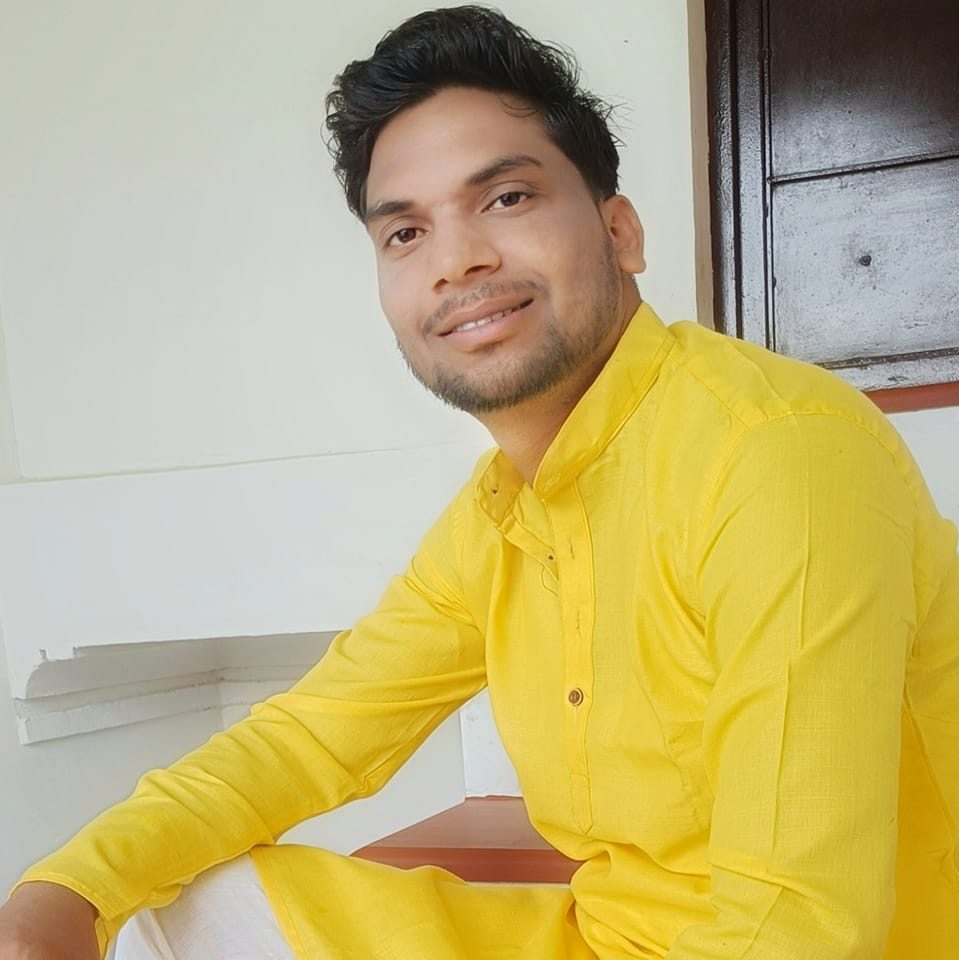
Ram Avtar is the Founder and Lead Career Analyst at Govt Results Alert. With over 6 years of experience analyzing Government Recruitment Notifications, SSC, Banking, and Railway examination patterns, he leads our fact-checking team to deliver authentic, timely, and verified job alerts directly from official government gazettes.
One thought on “Indian Army TGC-144 Recruitment 2026 — 30 Vacancies for Engineering Graduates, ₹1,00,000 Salary, Apply by June 11”
Comments are closed.